CBT (Dublin, Ireland) – The Revolution in Psychotherapy – “thinking about thinking…”

Many of today’s mental health experts are recommending Cognitive Behavioural Therapy (CBT) as a first choice treatment for pretty much all emotional disorders – stress, depression, anxiety, anger management etc.– rather than medication, or spending years undergoing the old style Freudian ‘shrink’  psychiatry.

whiteword

Why? It’s elegant and efficient. If applied diligently by somebody who is capable of self-awareness and self-critique, it can be life changing. It’s the only measured and proven psychotherapy in the world. And it’s fast (improvements show in few sessions, which means it’s cheaper for governments to provide as healthcare). Studies show that it’s effects stay with participants after treatment. Quite simply – it works.
whitewords

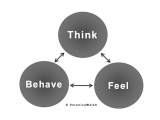
CBT is different to the traditional ‘talking therapies’… instead, it is a psycho-educational approach that teaches clients to apply methods and techniques to their problems – effectively becoming their own therapists by understanding and managing their thinking (cognitive), feelings (emotions), and doing (behaviour).  According to CBT, it is largely our thinking about (and interpretation and processing of) events that leads to our emotional and behavioural upsets. We human beings cause our own upsettness, therefore we can uncause it!

The theory that our thinking causes our problem emotions rather than events (which only influence them) is nothing new – we see that this has been the view of many deep intellectual thinkers with insight through the ages.wh
iteword

The ancient Greek stoics knew it – in fact the following quotes are from Epictetus

What disturbs men’s minds is not events but their judgments on events.

There is only one way to happiness and that is to cease worrying about things which are beyond the power of our will.

It is not he who gives abuse that affronts, but the view that we take of it as insulting; so that when one provokes you it is your own opinion which is provoking.

You see where we’re going with this?

Buddha
said:

We are what we think.

All that we are arises with our thoughts. With our thoughts, we make our world.

What we are today comes from our thoughts of yesterday, and our present thoughts build our life of tomorrow: our life is the creation of our mind.

And Shakespeare? :

Make not your thoughts your prisons.

There is nothing good or bad, but thinking makes it so.

I could go on and on, but you get the picture?!

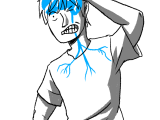
Anxious Man

CBT theory posits ‘the only thing in this world that can make you anxious, aggressive, or depressed… is YOU! It says that human beings create their own needless suffering of negative emotions through their negative and distorted style of thinking. For instance, check out the following simple Thinking, Feeling and Behavioural response to a situation:

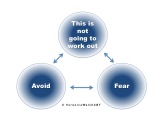
if you THINK that you are useless at talking to people,

you may FEEL anxious,

and GO QUIET on social occasions…

A CBT therapist would work with you to help identify your negative automatic thoughts, that cause the anxiety, that causes the avoidance behaviour (examples. ‘I’m useless at talking to people’, ‘I’m boring’, ‘nobody likes me’, I won’t be funny’, ‘they’ll think I’m dull’, ‘they don’t want to be stuck here with me’… and so on and so forth). Then the therapist will get you to examine the evidence and question the validity of this thinking. ‘So where is the evidence?’ they’ll constantly ask. ‘What are alternative possibilities?’. For instance, if you say ‘nobody likes me’, well… back it up! Example questions to ask yourself: Is anybody nice to you, ever? ‘well, yes’. Do you have any family/friends who like you and show it? Well, yes. Have you been out socially with anybody at all recently?  Well, yes.  – Okay – that’s put the lie to that negative automatic thought – that unhealthy absolute statement!

Keep a journal - write your thoughts and feelings down when you feel upset… catch irrational thoughts, and challenge and dispute them… stop yourself in your tracks whenever you find yourself automatically thinking them in future, and reframe.

Examples of new thinking to dispute that particular statement:

It’s not true that ‘nobody likes me’ – when I say things like that it’s irrational and only serves to makes me upset and feel hopeless..  it’s an irrational thought.  Throughout my life I have had, and do have, people in my life that like me.. I just have a bit of anxiety that I’m working on at this point in my life, and it makes me feel and behave in self-defeating and self-limiting ways that make it hard to connect and enjoy social activities. But millions of people all over the world have anxiety disorders at some point, and it’s totally fixable. It doesn’t have to be like this forever. I’m working on ways to live the life I want and deserve. In the meantime, it’s okay to be quiet. I am a worthwhile person, people would be lucky to know me. It’s understandable that occasionally a person might be uncomfortable around my discomfort, and react to me in a negative way. If that happens occasionally it’s okay, I accept it. I would prefer if that person was kind and respectful, but ‘it is what it is’, just because someone does a bad thing doesn’t make them bad. And if somebody thinks little of me I don’t have to agree with them!

Build self awareness. Catch your irrational thinking. Challenge and dispute it with rational healthy thinking – over and over and over, until you have a new automatic way of thinking. It works. It’s proven. Change your mind, change your mood. Think about thinking.

www.CBTandFeelingGood.com (Ireland) takes therapy out of the counseling rooms, turning it into education, teaching you to:

  • Distinguish between thoughts and feelings
  • Become aware of how our thoughts can influence our feelings in ways that are not always helpful
  • Learn about thoughts that seem to occur automatically and how they can affect emotions
  • Evaluate (based on ‘evidence’) whether these ‘automatic thoughts’ and assumptions are accurate or perhaps biased.
  • Develop the skills to recognise, interrupt, and correct this unhealthy thinking.

The basic theory is that we humans tend to let our thoughts run our emotions much more than we realise, needlessly upsetting ourselves over situations inappropriately if those thoughts are off-base. This can cause very real and debilitating problems. It’s easy to imagine how an individual susceptible to anxiety or depression could let thoughts like ‘I’m a terrible person’ or ‘my life is hopeless’ take over. CBT can help to rewrite that script.

Benefits of diligently applied CBT:

  • Decrease incidences of stress by correcting distorted perceptions of situations
  • Understand and accept/manage the physiological effects of stress
  • Increase emotional wellbeing – we will ‘feel good’ more of the time
  • Improve social skills & interactions
  • Improve self image & confidence
  • Improve focus, performance and productivity
  • Decrease self-defeating and self-sabotaging behaviours
  • Better understand ourselves & others…

Notes: CBT is a the worlds fastest growing psychotherapy, fast becoming the lead paradigm in clinical psychology (‘the evolution and revolution of therapy’). Published studies have shown it to be as effective as antidepressants for many forms of depression, and slightly more effective than antidepressants in treating anxiety. In the United Kingdom, the National Institute for Health and Clinical Excellence recommends CBT as the first treatment of choice for some mental health difficulties. In fact the UK government have also instructed the NHS to offer an option of CBT self-help (in the form of bibliotherapy (books) and online courses (computers) as it is a psycho-educational model so lends itself very well to that.

(Click HERE to link to an audio of a 4FM Ireland radio interview with Veronica Walsh, introducing CBT)

The so called ‘third wave’ of CBT is a holistic treatment that recommends relaxation and visualisation, breathing exercises, physical exercise, mindfulness, acceptance, and living in the present.

Click HERE to go to a newsletter showing session information/fees.

Contact us for more information : veronica@cbtandfeelinggood.com – 086 8113031

A Thought Replacement Exercise – a CBT worksheet/handout

Changing your thinking with cognitive behavioral therapy..

A simple exercise to challenge your negative automatic thinking, and replace with healthy alternative thinking…..

Catch the negative thought: Keep a journal, taking notes of the actual thoughts you are thinking when you’re in a situation that upsets you and ends in self-limiting and self-sabotaging behaviour. Example: ‘It’s going to be awful, I’m going to embarrass myself…’- (and then avoiding an event).

Thought Stopping: As you notice yourself saying these negative automatic thoughts, you can stop them mid-stream by saying to yourself “STOP”. Saying it aloud, or silently in your head if you are with people. You might also wear a rubber band around your wrist, giving it a little twang each time you notice you are allowing negative thinking to take over your head in a never-ending loop. It will make you more aware of how often, and in what situation, you are having the negative thoughts.

Challenge the negative thought: Challenge the thoughts, examine them to see if they’re valid. ‘Where’s the evidence for this? Is there another way to look at it?’. Example: ‘Actually, that’s fortune telling, I don’t actually know what’s going to happen, all I can do is my best, maybe I’ll be a bit anxious, I can cope with that if it happens, and it might not happen, I was okay last week at that other event even though I tortured myself before it with this kind of thinking….’

Summary: reframe and replace: Note the negative thought – stop it in its tracks – examine it for evidence – and if you decide it is irrational and unhelpful, replace it with alternative healthy thinking.  Here is an example:

Negative Automatic Thoughts Positive Thought Replacement 
Nobody likes me That’s not a true statement. My family like me, and I have my friend from work and my friend from school. And I got on well with many other people now that I think of it. Also, not everybody will adore and admire me in this life. I accept that. It’s the same for everybody. Also, if somebody does think little of you, you don’t have to agree with it …
It’s going to be awful, I’m going to embarrass myself… Actually, that’s fortune telling, I don’t know what’s going to happen, all I can do is my best, maybe I’ll be a bit anxious, I can cope with that if it happens, and it might not happen, I was okay last week at that other …

Try it yourself!

Negative Automatic Thoughts Positive Thought Replacement

____________________     ____________________________

____________________     ____________________________

____________________     ____________________________

____________________     ____________________________

____________________     ____________________________

____________________     ____________________________

Click to download this as an MS Word worksheet. Changing your thinking

Brain plasticity – you can actually rewire your brain with CBT!

So – you tend to look at life through a gloomy lens with your negative automatic thoughts …

  • You’ve had them forever.
  • They’re part of you.
  • In fact, they have (quite literally!) burned neural pathways in your brain – so they are ‘hard-wired’, and are as ‘auto-pilot’ and involuntary as the process of driving or making a coffee is to you…
  • You don’t ‘construct’ the thoughts, they just ‘are’….

So -  surely they’re just a part of how and who you are?  Is it even possible to change and challenge them at this stage? Is it worth the effort? Can an old dog learn new tricks? Can a leopard change its spots?

Yes!

Advances in science tell us that we can re-hardwire our brains, that we can imprint new healthy neural pathways OVER the old unhealthy pathways! Scientists have made the discovery that the brain is ‘plastic’ – that is to say that the brain has the ability to be shaped or formed by new activity – even into old age. Neuroplasticity (also referred to as ‘brain plasticity’) is the changing of neurons and the organization of their networks and function by ‘experience and learning’. In other (plainer) words, the adult brain is not “hard-wired” with fixed circuits. There are many instances of actual physical rewiring of circuits in response to training (learning) as well as in response to injury (e.g. strokes). There is solid evidence that the formation of new nerve cells occurs in the adult brain—and such changes can persist well into old age – so… we never ever stop learning and evolving and adapting… and a leopard can change it’s spots, and you can teach an old dog new tricks! Make the effort and reap the rewards.


Practice makes perfect
- practice practice practice makes an imprint! Reknowned psychiatrist and author Norman Doidge has in fact stated that neuroplasticity is “one of the most extraordinary discoveries of the twentieth century”. Imagine if you could change it so that your auto pilot thinking was calm and considered and evidence based? So that your emotional responses to things would be calm and appropriate – so that you would automatically feel good most of the time, even in times of difficulty? Yes, of course we would all choose that scenario if we could. And we can.  But it means taking CBT seriously – it means engaging in the exercises even when they’re a pain. Writing things down isn’t hard, but it takes open awareness and dedication to the task – the mental tasks as well as the written worksheets –  to really replace old thinking and behaviours… but bit by bit, the new thinking and behaviour will become natural and automatic to you – and you thereafter only have to do occasional brush-ups and revisits to your written exercises – the mental ones will be with you as a matter of course – it will be your new ‘philosophy of living’.

|

Here’s the ‘Science Bit’…

The brain consists of nerve cells (neurons) which are interconnected, and learning may happen through changing of the strength of the connections between neurons. “Plasticity” relates to this learning by adding or removing connections, or by adding new cells. According to the theory of neuroplasticity: ‘thinking, learning, and acting’ actually change both the brain’s physical structure (anatomy) and functional organization (physiology) from top to bottom. When a stimulus is cognitively associated with reinforcement, its cortical representation is strengthened and enlarged.

Plasticity’ generally means ability to be shaped or formed. More specific scientific meanings include:

  • Neuroplasticity; entire brain structures can change to better cope with the environment. Specifically, when an area of the brain is damaged and non-functional, another area may take over some of the function.
  • Plasticity (psychology); an intelligence factor that determines the ease of changing ones perception of a situation for finding a new solution to a problem. Lack of plasticity is termed rigidity.

“There is now ample evidence of active, experience-dependent re-organization of the synaptic networks of the brain involving multiple inter-related structures including the cerebral cortex” – in other words – the brain can change itself through learning and ‘doing’ – repeatedly, and for some kind of reward (feeling good? a better life experience? no stress? Your brain will react to the new experiences that come as a result of the new restructured and deliberate healthy thinking by LIKING IT, and burning new pathways)

“Control studies show that changes are not caused by sensory experience alone: they require learning about the sensory experience, and are strongest for the stimuli that are associated with reward, and occur with equal ease in operant and classical conditioning behaviors” – in other words, put the effort in! Practice practice practice! Change your thinking, change your brain, change your life…


Case study examples

Dr Shephard Ivory Franz – one very early study involved stroke patients who were able to recover through the use of brain stimulating exercises after having been paralyzed for years. “… Dr Franz understood the importance of interesting, motivating rehabilitation: ‘Under conditions of interest, such as that of competition, the resulting movement may be much more efficiently carried out than in the dull, routine training in the laboratory’.” This notion has led to motivational rehabilitation programs that are used today.

Michael Merzenich is a neuroscientist who has been one of the pioneers of brain plasticity for over three decades. He has made some of “the most ambitious claims for the field – that brain exercises may be as useful as drugs to treat diseases as severe as schizophrenia – that plasticity exists from cradle to the grave, and that radical improvements in cognitive functioning – how we learn, think, perceive, and remember – are possible even in the elderly.” Merzenich’s work was affected by a crucial discovery made by David Hubel and Torsten Wiesel in their work with kittens. The experiment involved sewing one eye shut (I know I know, nasty, but let’s be clinical in the reporting of this story and just take in the facts) and recording the cortical brain maps. Hubel and Wiesel saw that the portion of the kitten’s brain associated with the shut eye was not idle, as expected. Instead, it processed visual information from the open eye. It was “… as though the brain didn’t want to waste any ‘cortical real estate’ and had found a way to rewire itself.” It showed the brain ‘must be plastic’.

Richard Davidson is a Harvard-trained neuroscientist at the University of Wisconsin-Madison’s W.M. Keck Laboratory for Functional Brain Imaging and Behavior. He has led experiments in cooperation with the Dalai Lama on effects of meditation on the brain. His results suggest “alterations in patterns of brain function assessed with an MRI. Changes in the cortical evoked response to visual stimuli that reflect the impact of meditation on attention, and alterations in amplitude and synchrony of high-frequency oscillations that probably play an important role in connectivity among widespread circuitry in the brain.” – which means relaxation and visual exercises work to restructure the brain.

Draganski and colleagues (2006) recently showed that extensive learning of abstract information can also trigger some plastic changes in the brain. They imaged the brains of German medical students 3 months before their medical exam and right after the exam and compared them to brains of students who were not studying for exam at this time. Medical students’ brains showed learning-induced changes in regions of the parietal cortex as well as in the posterior hippocampus. These regions of the brains are known to be involved in memory retrieval and learning.

Recommended resource for more on neuroplasticity: The Brain That Changes Itself: Stories of Personal Triumph from the Frontiers of Brain Science (Viking) -  by Dr. Norman Doidge.  Dr Doidge, psychiatrist and author of this New York Times bestseller, brings us “a compelling collection of tales about the amazing abilities of the brain to rewire, readjust and relearn”.

The ABC of CBT – the starter exercise/handout to catch your negative automatic thoughts…

Introducing the ‘ABC’ Technique of cognitive behavioral therapy

If we can’t ‘catch’ our negative thoughts, then we can’t examine and challenge them. CBT gives you homework and exercises designed to guide and mentor you in the process of identifying unhealthy unproductive thinking, and changing it to healthy constructive thinking instead. Here’s a guide to the simple starter exercise, the ABC(D) thought identification and dispute forms…. you might use a hardback notebook where you can create these columns and fill them in yourself? or select and print our sample form… Good luck, and enjoy!

The ABC 3 column form is the staple CBT worksheet -: the a-b-c format is the intial and main method of CBT ‘thought identification’ – we use it to match thoughts to feelings and events – usually working backwards! With us filling in the ‘emotional and behavioural’ that is troubling us or causing us problems first, and then identifying the event(s) and the exact thought(s) that accompany it. These simple forms are invaluable, especially at the start of practicing CBT (becoming your own therapist) – they help us to build awareness of ‘how’ we think – they help us to see patterns and links over time – and most importantly, they help us see that our thoughts are often irrational, illogical and unhelpful…. 

Below I give some examples to guide you:

A = Activating Event B = Belief/thought C = emotional and behavioural Consequence
I have an important exam approaching ‘I’m going to fail! This is unbearable, I can’t stand it. I’ll never be able to prepare for it, not with life the way it is right now. I’m useless, why am I bothering? Anxious. Can’t sleep or focus on anything.
My partner has ended our relationship. I can’t live without her. I’ll never find anybody like her again. Everybody always breaks up with me. I’ll never be in a proper relationship. Life is not worth living if I don’t have somebody to love and take care of me. Depressed – I have no interest in going out, or even showering!
My boss has promoted Andrea to the management position, not me! That is unbelievable – he is a total idiot. And she is a total waste of space. She’s not even attractive or really popular! He did it deliberately even though he knows I should be the one, he’s never liked me. And she’s so smug and satisfied, smirking at me every day. They should treat me with respect. They’re horrible nasty people. Angry, aggressive – I’m not going to push myself in work anymore. I’m planning a confrontation with those two, I just have to work it out in my head. I’ve been bitching to all my colleagues and family – I’ll get even!

See what we mean about identifying exact thoughts and the emotions and behaviours the thoughts cause? Do you see how writing them down helps us to see that they may very well be (and often are) irrational and unhelpful? That they don’t really fit with the facts and that we’re causing our own extreme and inappropriate upsettness and self defeating behaviour because of them? Good…


After identifying our thoughts, we need to challenge them when they are irrational (dispute them with evidence and facts and alternative healthy thinking…) – so we add a fourth column ‘D’…

The following table gives several examples to show you how it’s done… You might try doing your own chart based on your own thinking?

(Reminder – identifying your unhealthy thinking and deliberately disputing the thoughts with healthy rational thinking will bring healthy emotional responses.)

A = Activating Event B = Belief/thought C = Consequence feelings/behaviour D = Dispute with Evidence –
I have to give a presentation in work! I am going to make a show of myself. It’s going to be AWFUL. I’ll be shaking, my mouth will be dry, I can’t do it. People will laugh at me. Anxious, afraid, can’t concentrate on putting together the content… feel ill, can’t stop thinking about it. Fortune telling as an absolute fact that ‘I AM’ going to make a show of myself is irrational. That’s fortune telling a future that I have no clue about. It would be more correct to say ‘I am afraid I’ll make a show of myself, but I don’t know how it will pan out’.Same goes for ‘I will be shaking’, ‘I can’t do it’, and ‘People will laugh at me’. Fortune telling! I simply fear these imaginings, I have no actual evidence those thoughts are rational and correct.I will ‘thought stop’ and disagree with and derail these thoughts as they occur rather than running them over and over in my head.
I heard that the gang were out for dinner last week – without me! Nobody likes me. I’m dull. I’m not nice. Life is horrible. I’m not talking to them, I want to ‘get them back’. No – I want to make them love me. Oh, I can’t stop thinking about it… Ashamed, humiliated, embarrassed, anxious, worried. Keep talking to everyone about it, asking for reassurance. It simply is not factual that ‘nobody’ in the world likes me. I have and have had people in my life that have shown they like me, it would be more correct to say that I’m having problems with my social networking right now that I plan to work on.I’m being very hard on myself stating that I ‘am’ dull and not nice – I’ve had plenty of experiences where I was happy and had fun in situations, my feelings and behaviour varies depending on situations and people and moods, just like everybody else. It would be more correct to say that I’m not happy with the way I feel and behave right now, and am aiming to change it.It’s not true that ‘life is horrible’, I can think of lots of things that are the total opposite of horrible. It would be more correct to say that I’m not enjoying life as I wish I would, I find things difficult right now. 

It’s not healthy for me to obsess about revenge on or reassurance from the gang in this situation. I can make a decision to live with this and accept it. I do not know the circumstances of what happened and I shouldn’t assume the worst. And, even if there is conflict, I don’t have to join in. Just because someone thinks little of you, you don’t have to agree with it.

I have an interview! I haven’t a hope of getting this job. There’ll be hundreds of applicants and I can’t compete. I’ll be nervous and ‘ordinary’ and tongue tied. It’s unbearable. I can’t stop worrying about it. It’s not worth putting myself through this, after all I know what will happen. Anxious, nervous, can’t face preparing, trying to ‘ignore it’ until I have to face it. Stating ‘I haven’t a hope’ or ‘can’t compete’ is irrational as I cannot tell what will happen in the future. It would be more correct to say that I’m nervous and worried that I won’t get it and will contrast poorly with other applicants. Most people would feel  that way.Yes, I expect I will probably be nervous, but that’s perfectly normal and most people are nervous at interviews. I shouldn’t label myself ‘ordinary’, everybody is unique, that term is redundant.I may or may not be ‘tongue tied, but what is that anyway? It’s not rational to imagine my tongue actually ‘tying’ and being unusable, I will change that statement, it’s not useful. 

Using the term ‘unbearable’ is not correct, I can in fact bear it, it would be more correct to say I’m nervous and would rather not be in a situation where I need to ‘bear’ it.

It’s not helpful or rational to opt out of it because of fortune telling, it’s more correct to say that I have no idea what will happen.

BLANK FORM (for you to select and print)

A = Activating Event B = Belief/thought C = Consequence feelings/behaviour D = Dispute with Evidence –


CBT_Handout_ABCD2 (CLICK TO DOWNLOAD MS WORD VERSION – CUSTOMISABLE)

When stress becomes a disorder.. a CBT view

Is your stress taking over? Here’s how to find out, and fix it.

Thousands of Irish people who are suffering from elevated and dangerous levels of stress as a result of the economic crisis are in danger of developing anxiety or depression. The dangers of stress are not widely enough understood – people need to monitor the changes stress is wreaking on their lives and behaviours, and become proactive about addressing the issue through stress management, and/or seeking assistance, if they feel it has become unmanageable.

For every one of us who have lost a job, or fear losing a job, or who struggle with mortgages, debt, or simply holding our families and lives together, stress is an every day occurrence. In a recession as deep as this one, the stress of battling through on a daily basis – dreading the postman and his bills, praying that the children don’t come home needing money for school tours or books – can become unbearable.

The World Health Organisation says that one in every four of us will suffer from an actual mental illness at some point in our lives – but that two thirds of us will never seek the help we need. Often, people become stressed to the point where it is actually debilitating, but don’t realise what is happening to them. They write it off as an inevitable consequence of the changes this downturn is bringing them, or say that they are just a ‘worrier’ or that it’s ’just how they are’, or they might put it down to a physical illness that has them feeling ‘run down’.

A survey last week for the HSF health plan in Ireland found that more than 50% of us feel more stressed than we did a year ago. 58% of those said that they couldn’t afford help to deal with it. Four in ten of us know somebody who has had to take time out from work in the last 12 months because of stress. Stress is real, it exists, it has negative effects, and too often, we ignore it.

Do you wonder if your stress has become a disorder? Ask yourself the following questions:

  • Are you tired most of the time?
  • Do you get emotionally upset more often?
  • Do you often have a sick feeling in your stomach?
  • Do you often feel dizzy when contemplating how you’re going to manage your situation?
  • Do you get ill more than you used to, with headaches, or cold sores, for example?
  • Are you constantly worrying?
  • Are you prone to self criticism?
  • Do you often feel helpless and hopeless and unable to cope?
  • Do you feel kind of afraid a lot of the time?

If the answer to most of those was yes, it might be time to take the situation seriously and take steps to nip it in the bud and even reverse it – before it takes over. Take a trip to your GP and have a chat about it if you feel you need professional help. It’s not ‘just you’. You’re almost certainly suffering the effects of stress, but it’s totally fixable – and you don’t need to feel ashamed – there are a lot of people in the same boat.

FREE OFFER – email me at veronica@CBTandFeelingGood.com or through my website www.CBTandFeelingGood.com to request a copy of my introductory CBT workbook – which is a guided self help with exercises to help you to develop new coping skills with healthy thinking!

Let’s take a look at stress and how to immediately address the issue yourself:

The obvious tips: The old cliché of following a good nutritious diet and exercising regularly to combat stress is a cliché because it’s true! Those are among the immediate things to address.

  • Diet: it is important that you make efforts to put in place a good nutritious diet – yes, that means fruit and vegetables – you need your basic vitamins. Oily fish is a great idea (for the Omega 3). Less white carbs and sugars, more protein, more wholewheat… Go easy on the coffee and fizzy drinks. Come on, you know what you need to do there.
  • Exercise: Regular exercise is CRUCIAL for body balance. The stress hormones produced by Fight or Flight cause all the damage – when we perceive a situation as a danger or hazard to us, our bodies immediately go into Fight or Flight, which was designed during evolution to help humans survive. It’s an immediate pumping up of the body to handle a physical emergency (developed because a sabre toothed tiger about to tear you apart was an occupational hazard of neandarthol man’s hunting and gathering – you’d need to either fight hard or run fast to survive, and Fight or Flight primed the body for just that). This is a primal process that we’re stuck with for good or ill – and the anxious person will view many things as a ‘tiger’ inappropriately.. but the body doesn’t distinguish between a physical or pyschological threat, it will, within nanoseconds, pump you up by releasing the stress hormones Adrenaline and Cortisol, which speed up the bloods circulation (thumping heart), flood the lungs with oxygen (restricted breathing/hyperventilating) and temporarily shut down systems not needed to fight or run (namely your digestive system and your immune system). That’s not good, right? And if we’re constantly perceiving events as if they are an invisible tiger – we’re going to cause massive physical and mental wear and tear as our bodies stay in a simmering process of Fight or Flight. The cortisol is the most dangerous hormone – shutting down the systems gives you the sick feeling in your stomach, maybe irritable bowel syndrome, maybe diarrhea.. and compromising the immune system makes you vulnerable to colds etc – it’s also blamed for strokes, heart attacks, depositing fat around the middle, and even premature aging (it breaks down muscle). And the whole thing will have you in a permanent state of fatigue! These things you’re feeling are very real. Click on the Fight or Flight post for more information on this. Knowing what is happening and why can be hugely helpful in dealing with the uncomfortable physical effects of stress and anxiety (especially when they escalate to panic attacks). Exercise gives an outlet for the extreme physical priming of fight or flight – it will stop the production of the stress hormones and will elevate your seratonin/dopamine levels for the ‘feel good’ high people talk about. It will also reactivate your immune system and return your body to ‘homeostasis’ (balance). Studies indicate exercise is a potent anti-depressant / anti-anxiety, and is a great sleep aid.  The major results only last for a few hours though, which is why regular (maybe 5 times a week) exercise is the way to go. It doesn’t have to be a gym – brisk walking is fine. Make it a habit and a routine, get an iPod and enjoy the journey.
  • Relaxation – when we truly relax, we release relaxation hormones that neutralise the stress hormones, and return us to homeostasis. So you should make regular efforts to indulge in pursuits that you know relax you – a candlit bath, a massage, yoga, a movie, meditation… whatever relaxes you. You should also learn breathing exercises, as the body overloads on oxygen when it is fearful which causes physical distress – in fact the adrenaline stimulous and oxygen overload causes our scatty ‘dizziness’. Click HERE for a 15minute guided relaxation/visualisation audio exercise.

Socialise: Studies show that those who have a good network of family and friends weather these storms more easily – anxiety and depression tends to cause avoidance/isolating behaviour, make efforts to avoid this. If you do not have a large social network, join a club! This need not necessarily cost big bucks – have a look at www.meetup.com and check out what’s happening in your city. (No it’s not a dating site! It’s a global social networking site with meetup groups for all sorts of things – coffee meetups, bookclubs, hiking, salsa, women’s groups etc. Though hey, nothing wrong with dating sites either!).

The not so obvious – CBT! : You can strengthen your ‘coping skills’ by recognising how stress causes us to develop unhealthy automatic negative thinking that is the cause of much of our own extreme emotional ‘upsettness’. We can actually learn to develop healthy thinking with an option of ‘Low Intensity CBT’ – this is practical ‘guided self help’ that effectively teaches you to become your own therapist. CBT is ‘cognitive behavioural therapy’ – the world’s fastest growing therapy for all emotional health issues. Low intensity CBT is a fast intervention version that teaches you new coping skills by taking therapy out of the counseling rooms. It will help you to adjust the way your interpret and process events so that not everything is a ‘tiger’ that will immediately launch you into flight or flight. It’s a very practical use of modern psychotherapy tools that may just give you back your calm and your life, no matter what is thrown at you.

The basic theory of CBT is that it is not an event in your life that causes your upsettness per se – it’s how you interpret and process the event that determines your emotional response – which triggers the physical response – which causes self-defeating and self-sabotaging behavioural responses. The event just influences you – it’s your style of thinking that dictates your feelings. If you learn to think realistically and in proportion to events based on rational evidence based healthy thinking, you’ll be a calmer and happier person. It can be life changing.

Just look around at the other people in your life that face the same (or worse) challenges, but handle it in a different way and continue to take enjoyment out of life. Their interpretation and processing of things that happen is healthy and rational.

You can learn to understand and identify and manage negative thinking and behaviour with CBT methods and techniques – you can develop new skills in self-management to help you cope no matter what life throws at you! Human beings cause our own levels of upsettness through our thinking – and the good news is that we can uncause it.

If any of this sounds like you, then click through this blog for more useful information on CBT and Fight or Flight – and to hear an audio explanation of CBT ….

It is absolutely essential that people realise that they can do something practical and proactive about their emotional health when they’re very unhappy with the way they’re feeling and behaving. It is nothing to be ashamed of. You don’t have to suffer in silence.

The Vicious Circle of Negative Auto-pilot Thinking

Cartoon Man with though arrows

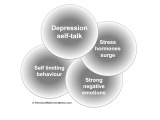
When we are stressed and anxious, our Negative Automatic Thoughts (NATs) assault us involuntarily… the thoughts go round and round… they become more and more unhelpful and destructive – they cause us to ‘feel’ distressing emotions – this prevents us from doing things we wish we could/would – and of course procrastinating gives us even more time to think about all the NATs – this helps to confirm the NATs – and so it goes on and on and on… in a vicious circle…

Task: take a moment to consider the diagram below…

Stressed and anxious and depressed people tend to think thoughts that increase their anxiety in everday situations – these are known as ‘automatic negative thoughts’, and have the following characteristics:

  • They are not realistic or logical
  • They are thoughts which increase negative feelings such as anxiety, low self-esteem, and stress
  • The are self-defeating
  • They are ‘hard-wired’, and happen ‘automatically’ (automatic thoughts).

Think of how a specific automatic negative thoughts of yours bring you on this circular journey…

Check which common thinking errors you have, and make a decision to work on challenging and replacing them with new healthy thinking with Cognitive Behavioural Therapy!

Understanding and tackling ‘interview anxiety’ – a CBT view

An exercise in disputing irrational thoughts with Cognitive Behavioural Therapy…

whiteword

Interview Anxiety – A Case Study

Patricia has been unemployed for a year, and has been invited to attend an interview. She has been given 10 days notice to prepare, but is spending most of it worrying herself sick.  Her worry turns to anxiety, and the anxiety turns to a panic attack several days before the interview. She is tempted to pretend she is sick and to cancel it, as she thinks there is simply ‘no point’.

Have a look at the kind of negative automatic thoughts Patricia uncovered by using a simple CBT table (yes – CBT gives you written homework!) :-

FEELINGS:

anxious, frightened, nervous

THOUGHTS

I can’t do this.

I’m going to make a complete mess of it.

I’ll make a show of myself.

They’ll laugh at me for wasting their time.

I haven’t got a hope in hell of getting the job.

I’m such a loser.

It’ll be awful, I can’t bear it.

I’ll never get a job.

I’ll never be happy.

It’s hopeless.

PHYSICAL REACTION

Knot in her stomach / nausea,

Waves of dizziness

Heart pounding

Trembling and shaking

Poor concentration & focus,

Hot and cold sweats

BEHAVIOUR

Procrastination & Avoidance Sleeplessness (busy head)

Not engaging in enjoyable  activities

Isolating myself

Self-medicating with alcohol


Patricia learns that she has a negative ‘self-talk’ pattern. Her thoughts are irrational and not based on evidence. We will use a simple Cognitive Behavioural Therapy thought form to identify and dispute these thoughts.

Summary: Patricia is not living in the present – but rather is sacrificing the present by becoming consumed about worrying about the future. The future does not exist yet! Short of having a crystal ball, none of us know for sure what is going to happen. We live right now in the present – to sacrifice the things we enjoy doing, and interaction and fun, so that we can obsess and upset ourselves about an incident in the future is irrational. Especially when we catastrophise and fortune-tell very unpleasant negative outcome,s and decide that they are absolute ‘facts’.

Patricia views the interview as an extreme hazard to her, something to be feared, so her body goes into a constant simmering of Fight or Flight … But the danger is pychological rather than actually physical. If Patricia can convince herself there is actually nothing to fear – she will not have the constant buzzing worry and the physical ‘collywobbles’. She might even be intellectually curious, and even excited, about how it will go. Imagine?!

FACT:  It is likely that Patricia has ‘demand thinking‘ of Musts and Shoulds and Ought To’s that she applies to herself and others and the world… CBT can help to break that pattern, so that Patricia will have an appropriate response to the situation – so that she will realise that it is not written in stone anywhere that she MUST perform ABSOLUTELY PERFECTLY in this interview. It is not declared by the stars that she MUST get this job, or else THE WORLD AS SHE KNOWS IT WILL END. It is NOT THE ONLY CHANCE Patricia will ever have to work. It is likely that nobody but Patricia and the interviewer will ever know or care about the tiny minutiae of the actual interview itself… She will either be the best fit for the job – according to the (fallible) interviewer(s) and their criteria (which she has no knowledge of) – or she won’t! C’est la vie. All she can do is her best – the ideal healthy view is of curiously and excitement mixed in with appropriate nervousness.

Disputing the irrational negative automatic thoughts that are causing Patricia’s upsettness and undesirable behaviour with actual evidence based alternative thinking is required here!

To track our negative automatic thoughts – so that we can actively dispute them – we can use a simple CBT Thought Form, a journal style two column structure that holds the thought, and then examines it and demolishes it if it’s irrational. We dispute the thought and study the new healthy realistic thinking – then as the thoughts occur in the future, we ‘thought stop’ and deliberately choose to think the new thoughts instead. It’s hard. You must do it over and over again. But it works. If applied diligently, it could become the way you think automatically, allowing you to LIVE YOUR LIFE! Which would be wonderful? Okay – enjoy!


Tips for disputing irrational negative thoughts
:

  • What is the evidence?
  • What alternative views are there?
  • What is the effect of thinking the way I do?
  • Is my thinking realistic?
  • What would I tell my best friend?

Have a go yourself by stepping in to Patricia’s shoes and disputing the negative automatic thoughts she incovered – I’ll start you off:


I can’t do this. /
It’s not true to tell myself I can’t do this – I can in fact do it, I just don’t feel I want to! It would be more correct to say that I’m afraid to do it and don’t think I’ll do it well. Thinking in an absolute and negative way only serves to maximise my discomfort and make me avoid situations instead of facing them, or even finding them interesting or exciting.

I’m going to make a complete mess of it, it will be awful. /
There’s no evidence to support this thinking. I’m ‘fortune telling’ an event that hasn’t happened yet. In actual fact I have no idea what will happen on the day.. I know that I’m nervous and worried that I won’t perform well enough to get the job – but ‘awful.ising’ the situation with strong language likethat is extreme and irrational and causes me to feel anxious and behave in self-limiting ways. It’s unhelpful. It has always been unhelpful. It would be more correct to say that ‘I’m nervous and worried that I won’t impress the interviewers.’ This is normal for all of we fallible human beings when we’re putting ourselves up to be judged in order to get something we want – it is what it is! I can, if I wish, choose to be curious about it and to simply attempt to do my best and go with whatever happens. Even if I show nervousness, to whatever degree, well, so what? It won’t be the first or last time they’ll see that. And you never know – I might do just fine, and it will be a valuable learning experience whether or not I get the job! 
I’ll make a show of myself. /

They’ll laugh at me for wasting their time. /

I haven’t got a hope in hell of getting the job. /

I’m such a loser. /

It’ll be awful, I can’t bear it. /

I’ll never get a job. /

I’ll never be happy again. /

It’s hopeless, what’s the point? /

Do thoughts cause feelings and behaviours? A CBT view..

Your thinking causes your emotions – events and situations only influence them…

If our thinking is irrational and negative we’re going to cause ourselves ‘upsettness’ – and behave in self-limiting ways.

This is the core theory of Cognitive Behavioural Therapy. All of its methods and techniques developed over the past decades flow out of this simple premise.

So it follows that if we can change unhealthy thinking to healthy thinking, we will feel and act in a way that’s more constructive and doesn’t cause us unhappiness or pain or anger or self-sabotage or destructive behaviours…

Let’s take a look at a couple of examples of how our thoughts determine our emotional mood and subsequent behaviour – we’ll take exactly the same scenario, but put two different thinking types in as the star…

whiteword

Example of unhealthy thinking and consequential behaviour:

Event: Your colleague snaps at you when you say good morning.

Thought: You think “Oh God, Tom really doesn’t like me, and he certainly doesn’t respect me. I feel humiliated. I’m embarrassed. What did I do to make him treat me this way? It must have been that thing last week. Or maybe that other thing last month. Does everyone in the office feel this way about me? Of course they do! Nobody really likes me. I’m a [insert whatever negative you attach to yourself generally].”.

Feeling: You experience emotions that reflect this thinking – eg shame, embarrassment, stress, anxiety, hurt… take your pick. And your body reacts by jumping into ‘fight or flight’ mode.

Behaviour: Your irrational unhealthy kneejerk thinking and resultant feelings cause self-defeating / self-limiting behaviour – all that day and night, and most likely into the next day and perhaps the next, and the next…

  • • often Avoidance Behaviour – where you withdraw and stay away from people and interactions, and feel tongue tied so become quiet, and can’t focus so procrastinate in order to endlessly ‘worry’ and ‘awfulise’ this ‘horrible’ thing that’s happened, so you can re-run it as a movie in your head, perhaps changing the script (‘I should have said blahblah, and then he’d say blahblah) and so on.
  • • If you have ‘demand’ thinking, you may react agressively and set out to punish Tom for his behaviour, and carry a disturbing anger and resentment around with you – upsetting yourself and others in a way that is out of proportion to the event (“you must not treat me that way, you should behave appropriately and with respect, now you deserve my wrath – actually everybody does, because the world is ‘awful’ and ‘it’s not fair”.)

whiteword

CHANGE THE THINKING AND CHANGE YOUR FEELING AND BEHAVIOUR!

whiteword

Alternative healthy example:

Event: Your colleague snaps at you when you say good morning.

Thought: You think ‘Gosh, Tom is in a horrible mood! What’s up with that? What’s wrong with him? Maybe he’s feeling a bit low…’.

Feeling: You experience emotions that reflect this thinking – eg confusion, disappointment, concern, curiousity… but you don’t assume you ‘know’ why he did what he did, or that it means you’re a bad person or a loser, or that it has anything in particular to do with your value at all – you even wonder if you may have misinterpreted it.

Behaviour: Your rational balanced thinking and resultant feelings cause you to react in positive ‘healthy’ ways.

  • • You immediately tell Tom you feel he just snapped at you – maybe using humour – you ask if you’ve upset him in any way, or if he’s just ‘in the horrors’ – you ask if he’s OK. You attempt to cheer him up.
  • • Alternatively you say nothing and ‘let it go’ and don’t let it affect your self-esteem – you don’t carry it around with you or use it as a stick to hit yourself with all day. You don’t feel Toms behaviour or attitude defines who you are and your value. And you don’t feel it defines who he is or his value – ergo you don’t feel the need to badmouth him to everybody else and obsess and plot to punish him for his behaviour.

whiteword

________________________________________________________________


Do you see how the same event can cause different feelings and behaviour depending on your ‘perception’ of the event and of yourself? If your core belief is that you are a worthless/inferior person, you’ll be more prone to the first scenario – whereas if you have a healthy acceptance of yourself (and others), and a belief that you’re a worthy individual, the second scenario is more likely.

Can you think of alternative scenarios? & reasons for Toms behaviour that are not all about you (personalisation)? We shouldn’t assume/mind read/or fortune tell… And – even if somebody does have an unfavourable view of us (this will happen through our lives), we don’t have to share it!  (See ‘common thinking errors‘ for a description of typical negative thinking styles.)

We can make it so that the second healthy thinking scenario is natural for us – with CBT!

________________________________________________________________


Task: review the following basic CBT exercise to test the premise on yourself – go on, it’ll just take a few minutes…

First: think of an occasion when you were very emotionally upset, when you were not happy with the way you felt or acted… then ask yourself the following questions :

•  What thoughts were you thinking? (exact ‘statement’ thoughts not vague descriptions)
•  What emotions were you feeling (eg stressed, anxious, jealous, angry etc. You can have several)
•  What was your body doing? (were there any physiological reactions to your emotions – butterflies, shaking etc?)
•  What did you do? (what was your behaviour, how did you act? in a way that made the situation better or worse?)


Second: think of an occasion when you were delighted with yourself – when you were thinking positively and behaved in a way that made you proud to be you… and then apply the above list of questions to that situation!

whiteword

See the difference? Can you make useful observations? Do you agree that your negative/positive thinking and perception and attitude caused your feelings and behaviour? You do? Great – CBT should work well for you then. Enjoy the journey!

Understanding Cognitive Distortions (Common Thinking Errors)

Blue Sparkle Brain ImageWe are always constructing reality every bit as much as we are perceiving it…

… theories suggest that a person is not ‘stimulus-bound’ – or in other words, that a person does not just reflexly respond to events and situations, instead he selectively interprets and processes the information according to his own core beliefs and perceptions


Mental Filtering!
In other words, we interpret events by filtering and re-framing them so that they fit into how we think things are, not always how they actually are.  (This perception, or ‘lens we view life through’ is referred to as a ‘schema’ in psychology.)

There is a famous eyewitness testimony experiment (by Allport and Postman in the 50’s) – whereby people were shown a picture of a scruffy white man holding a razor or knife up to a smartly dressed black man – and the eyewitnesses had to pass the story on to someone else, who passed it on to someone else and so on… by the end of the line the protagonist had turned into the black man, and the victim the white man. This is thought to be because people filter according to their core beliefs/schema, and stereotypes and prejudices are very much part of them.

Theory: if our beliefs and perceptions are distorted or ‘faulty’, if the lens we view life through is ‘off’ – we’re going to mis-interpret events and cause ourselves (and perhaps the people in our lives) needless suffering and emotional disturbance…

“I have been through some terrible things in my life… some of which actually happened!” Mark Twain

The following are typical Cognitive Distortions (errors in thinking / negative thinking styles) - You will see yourself there, but don’t worry, we ALL do some of these, some of the time… but if, for you, it’s often – and causing you emotional upset and self-defeating/sabotaging behaviour – it’s time for CBT! It’s time for change…


Demand thinking: ‘Shoulds, Musts, and Ought To’s’ – This is maybe the most important thing most of us learn from CBT. It is when you tell yourself that you/others/the world must and should and ought to be the way you expect them to be. Otherwise everything is awful and terrible and unfair and you can’t bear it, and/or won’t stand for it. This is unhealthy ‘demand thinking’ – and sets unrealistic and irrational expectations that cannot usually be met. The demands we make on ourselves and others and the world are the cause of a lot of our ‘upsettness’ – and we cause it ourselves! CBT will teach us to replace the demands with ‘peferences’ instead – it neutralises the demands, and teaches us how to reframe with healthy alternative thinking that will help us aim for unconditional acceptance of ourselves and others and the world.

All-or-Nothing” Thinking – Things are viewed in black-and-white categories, with no shades of grey in between. If a situation does not go perfectly, you view it as a total failure. All-or-nothing thinking is thinking in extremes. For example, “Unless I perform perfectly in this task, I am a failure”. Perfectionism is very related to this way of thinking. Perfectionists have unrealistically high expectations of themselves – and other people too!

Overgeneralisation – A single negative event, such as a romantic rejection or a career setback, is viewed as a recurrent pattern of defeat. Words such as “always” or “never” tend to crop up here, for example, if a person is rejected by his girlfriend he may think “It’s ALWAYS the same. Women are ALWAYS dumping me! I will NEVER be in a loving relationship.”

Mental Filtering – this is where you view information through your own unique distorted ‘lens’ – not seeing things as they really are, but seeing them how you ‘think’ they are – and most likely coming to the wrong conclusions, and interpreting events/situations in a negative way.

Discounting the Positive – You reject positive experiences by insisting that they ‘don’t count’. For example, if you are congratulated on your presentation you may insist that `anyone could have done that’, or say to yourself that you could have done a much better job. Discounting the positives takes the joy out of life and makes you feel inadequate and unrewarded.

Mind-reading & Fortune Telling: Jumping to Conclusions means interpreting things in a negative manner even though there is no evidence to support your conclusion. This may involve mind-reading, where, without checking out your facts, you conclude that you know what someone else is thinking about you (“She thinks I’m an idiot”, “they all hate me”), or fortune-telling, where you predict that things will turn out badly (“This interview is going to be a disaster, I’m going to make a total show of myself”).

Emotional Reasoning – You assume that because you feel bad, the situation must be negative. For example, “I feel anxious so I must be in danger”. Or: “I feel suspicious and jealous, and I trust my intuition so that must mean there’s something to be suspicious of”. Please remember: FEELINGS ARE NOT FACTS!

Labelling (rating) – This is an extreme form of all-or-nothing thinking. Instead of saying “I made a mistake”, you say “I’m a complete loser”. You may label yourself a fool, a failure, hopeless. Labelling is irrational, as you are not ‘what you do’. Labelling can be applied to other people as well, which unfairly generalizes about the other person in a derogatory way. For example, “My boss is an idiot”, “she’s a loser:. These labels are just abstractions that make people feel bad about themselves or others.

Personalisation and Blame – Personalisation happens when you hold yourself responsible for something that is not entirely under your control. When a father received a report card for his son which was critical of his progress, he told himself “This shows what a bad father I’ve been”. A woman who is beaten by her husband may believe “If I was a better person he wouldn’t hit me”. People may also blame other people for their problems, for example “I beat my wife because she drives me to it”. Blame does not work because it prevents you from taking responsibility for your life. Another form of personalisation is when it’s ‘all about you’ – when you cannot see outside of yourself).

Low Frustration Tolerance -‘being highly ‘intolerant’ – . (I-can’t-stand-it-itis!) – this is when a person holds the belief that they cannot and should not have to tolerate frustrating things. This assumes that when something is irritating or difficult to tolerate that it is ‘intolerable’ or ‘unbearable’. This thinking error magnifies discomfort to an extreme and can lead to extreme behaviour. For instance, you’ve heard of the phrase ‘he doesn’t tolerate fools gladly’ which often means the person is rude and negatively selfish to the person they think is a frustrating ‘fool’. It can also be when a person is negatively selfish, knowingly at the expense of someone else, as they work on the principle ‘I want – therefore I must have, or else I can’t stand it’. Telling yourself you ‘can’t stand’ something leads you to focus more on the discomfort of it, and leads you to underestimate your ability to cope with discomfort – many things are difficult to tolerate but become even more so with this thinking.

“Awfulising”, or Catastrophic Thinking – This is when people make out situations to be much worse than they actually are, and when they envision the absolute worst case scenario. For example, “I’m going to totally screw up this leaving cert. I’ll make a mess of everything. Everybody will be laughing at me. It’s not fair. I can’t bear it. It’s awful…

Key aims –

  • Try to challenge your ‘should and must and ought’ demands – neutralise by changing them to ‘preferences’ instead.
  • Don’t use emotional reasoning.
  • Don’t ‘judge’ or ‘label’ – look for evidence.
  • Don’t put yourself down. Don’t put others down to ‘big yourself up’.
  • Don’t try to impose your beliefs on persons/groups.
  • Avoid being ‘negatively selfish’ at the deliberate expense of others.
  • Don’t try to punish yourself or others because of ‘bad behaviour’ (in your view!). These choices hurt YOU!
  • Aim (at least aim) for unconditional acceptance of the self, others and the world. And you will be MUCH happier and life will be more pleasurable for you and others in your life.
  • Remember: nobody is perfect – everybody is just trying to live and deserves compassion… including you!

CHALLENGE YOURSELF..

THINK ABOUT THINKING..

CHANGE YOUR MIND CHANGE YOUR MOOD..


“Why don’t men ask me out on dates?” A CBT view…

So – you haven’t had a boyfriend for a long time?

You get hit on sometimes, but men don’t ask you out on dates?

You think it’s not fair, as you know that you’re smarter or prettier or more stylish or whatever than other women you see in relationships?

Maybe you think that men are ‘useless’, or that it’s impossible to meet a man in your city?

white word

Hmmmm. You might want to examine how you’re ‘thinking‘ – and whether it makes you feel and behave in ways that are self-limiting, self-defeating, and self-sabotaging.


I assume you’ll agree that doing what you’ve been doing isn’t working out for you – and that you’re up for making some changes? Okay, it might be time to dip into Cognitive Behavioural Therapy (CBT). According to CBT, it is largely our thinking about (interpretation and processing of) events that leads to our emotional and behavioural upsets. We human beings cause our own upsettness, therefore we can uncause it! CBT helps us to overcome most of the emotional and behavioural challenges life throws at us  – to change unhealthy thinking patterns – and learn new coping skills for stressful situations.

But first – we have to recognise and accept it when we have unhealthy thinking patterns. This post explains what they are, and takes a look at how CBT theory might apply to those struggling with dating/social skills.

Let’s look at a case study of two examples that will help you to understand how thinking links with feelings which links with body reactions which links with behaviour – this understanding may point you in the right direction for making healthy changes to your own thinking that might help you to get where you want to go…

_________________________________

Mallery and Tina are good friends. They make great efforts to look attractive. They go out every week. They dress up and go to popular bars, and locate a nice prominent place to sit – having a few drinks, chatting, and silently hoping that they’ll meet a man – and be invited out for dinners and treated like a princess – and live happily ever after… But neither of them ever do.

Mallery had a couple of short relationships years ago, and a few  flings since, but nothing has been happening even on the fling front for a very long time.

Tina has never really had a ‘proper’ boyfriend, but has had several  random short lived flings through the years.


What’s a fling? Snogging or sleeping with a man who does not want to actually date you. This can be a ‘one-nighter’ or over weeks or even months. (Often we make every excuse in the world for such men, since we’re not able to process why he’s not with us ‘properly’: he’s so confused, he’s gone through a bad relationship and is scared of committing, he’s in a bad place, he’s so busy with work, he’s afraid of my strength – yadda yadda yadda). Hmmm. No matter, back to the story….


Okay – let’s take a peek at one of their nights out:

  • They’re sitting at the bar of a popular pub on a Thursday night. It’s quite busy. Lots of men in suits! Yay!
  • One drink down. Another drink down. Chit chat, chit chat. Not totally paying attention to each other, heads swivelling to check out the talent…
  • Yesss! Two men take seats at the bar. They’re good looking, they’re well dressed. They’re chatting to each other, but DEFINITELY giving sneaky glances to the girls. Happy days!
  • Mallory: ‘Don’t look now, but they’re totally looking at us‘. Tina: ‘I know! What do you think? *giggle and nudge*
  • After a short time, the men turn their chairs and make an approach – ‘Hello ladies, are you having a good night?’ *smiles*


NOW
– here’s where it gets interesting – let’s take a look inside the girls heads - we’ll check out their THINKING, and how those thoughts make them FEEL, and how those feelings affect their BODIES, and how all of this affects their BEHAVIOUR. Let’s go:

white word

Mallory

Thinking – ‘This fella really fancies me. Do I want him as a boyfriend? Would I be proud to show him off? Does he match up with my LIST? What does he work at? Where does he live? Uh oh, he’s being a bit of an idiot. Is he nervous? What’s wrong with him to be single at his age anyway? Oh, I wonder if he’s got a child from a previous relationship! Oh, that’ll be really messy. And the ex would always be around too… Sigh. So maybe I’ll give him my number, maybe I’ll kiss him goodnight – I might date him, but he’s far from perfect.

  • Feeling – Aggressive, annoyed
  • Physiological -muscles tensing, shaky, feeling light headed
  • Behaviour – bullets a series of questions as if she’s interviewing him, pulling faces and rolling her eyes when she feels he’s ‘being an idot’, mocks him none too gently – eventually launching into her oft repeated ‘charming’ speel of ‘are you out tonight looking for a woman? what kind of woman? what’s wrong with men around here? what do you all want? You’re all useless, no offence. Men are just looking to get laid aren’t they?’… While being generally pompous and pouty (trying to be all sexy and cool).

Tina

Thinking – ‘I have to make this guy fancy me. I need him to think I’m lovely and be into me. Oh, am I making a fool of myself here? I am. Why did I say that? It sounded stupid. Does he like me? No he thinks I’m an idiot. He’s not really coming on to me like he did at the beginning. He’s being a bit flippant. He’s not attracted to me now he can see me close up. I’m boring him. Is he looking over at those other girls?  He is. He’s not really impressed here. I’m messing this up.’

  • Feeling – anxious, nervy, shy
  • Physiological – tummy butterflies, shaky, heat rising in her face, heart beating fast, breathing quickening
  • Behaviour – not saying too much, not really concentrating on what he’s saying and engaging with it, giggling at pretty much everything he says even when it’s not appropriate. Goes to the ladies room a few minutes after they first approach to touch up her makeup. Comes back and continues the giggling. Giggle, giggle, giggle… a little too loud, too often.

white word

Okay - can you see how the same event elicits different thinking from the women? So it’s not the event or situation that causes the feelings and behaviour, that only influences it, it’s the thinking that causes it.

How was it self-sabotaging? Well, not only were the girls not particularly enjoying it or feeling good – THE MEN BECAME UNCOMFORTABLE TOO – AND THEY MADE THEIR EXCUSES AND LEFT - and, not for the first time, the girls were left a bit dazed – where did they go? what? (Mallory thinks ‘what is wrong with him, he’s an idiot!, while Tina thinks ‘what is wrong with me, I’m an idiot!) – but they dealt with it by telling each other the guys were rubbish, ‘hahahaaa, as if we’d be interested in the likes of them, as if! If we’d been into them we could have had them.. yeah‘ Oh dear, oh dear, oh dear… Let’s take a look at this…

The ladies are making lot’s of classic mistakes – not least going out ‘on the hunt’ in the first place!  Going out with expectations and demands that may not be met only serves to upset them – and ‘irrational thinking’ makes them react to any man who looks sideways at them in a ‘RED ALERT’, fight or flight, way  – instead of enjoying an evening of interesting chat and laughing, even if it doesn’t result in romance.  Their thinking is causing them problems. They can change their thinking…


CBT theory posits ‘the only thing in this world that can make you anxious, aggressive, or depressed… is YOU! It says that human beings create their own needless suffering of negative emotions through their negative and distorted style of thinking.

white word

For instance, check out the following simple Thinking, Feeling and Behavioural response to a situation that might fit Tina:

if you THINK that you are dull or unattractive or ‘weird’,

you may FEEL anxious,

and GO QUIET or behave in inappropriate self-limiting ways on social occasions…

white word

For Mallory:

if you THINK that people should, must, or ought to be a certain way, but they don’t conform to your demands,

you may FEEL angry

and become AGGRESSIVE or behave in inappropriate self-limiting ways on social occasions…

whiteword

The ladies are making some classic common thinking errors - fortune telling, mind reading, jumping to conclusions, fantasising a future, demand thinking…. and so on. If they don’t build self awareness and tackle this problem, they’ll keep on feeling and behaving as they do now – OR they can break the pattern…

CBT will teach you methods and techniques to dispute the irrational unhealthy thinking, and replace it with healthy alternative (realistic) thinking… and you will learn new skills to relax and cope with demanding and stressful situations – CHANGE YOUR THINKING, CHANGE YOUR MOOD….

Using CBT will help you :


So – think about your own situation.
Identify any patterns you have that will help you see how you think, and how that might be creating the feelings and behaviours you’re not happy with in yourself. And then have a click around the other posts (below and in the side bar) on this blog, they  go into more detail about CBT and thinking styles, so that you can see how they might apply to you, and what you can do to change your thinking when it’s destructive, so that you can get the life you want…


Click below to link to posts:

An introduction to CBT

Do thoughts cause Feelings and Behaviours?

The perils of Demand Thinking (musts and shoulds and oughts)

Common Thinking Errors / Styles

Understanding Fight or Flight

Good luck out there!

And remember, if you’re in Ireland, you can book one to one private session with me to learn how to use CBT – see www.CBTandFeelingGood.com for information.


PS – the old cliche of having a better chance of meeting a partner by joining clubs with people that share your interests is a cliche because it’s true! As is the idea that we should go out to enjoy the company of the people we are with (truly listening and interacting with them).

“Oh God, I’m shaking, I feel sick!” (the physiology of fight or flight)

Evolution produced us: today’s fabulous human beings. But… there are a few design flaws. And some primitive responses we’ve been saddled with that often do more harm than good these days. But we can learn to understand and control them with CBT…

TigerFace

What is ‘fight or flight’? When we perceive a threat, our bodies go into ‘fight or flight’ mode in an instant – this physical response was developed during evolution to help us survive the sabre-toothed tiger, or that troublemaker that was trying to oust us from the tribe, or indeed anything that threatened our survival.


“Fight or flight
is an instant pumping up of our bodies (with a series of physiological changes) that better equips us to fight hard or run fast from ‘danger’ – it prepares us for extreme physical action in an instant.”

Here are a couple of examples that will explain the immediacy and effects of fight or flight:-

  • You walk over to your lovely bowl of fruit. Reach in, and… OH! a big SPIDER! EEK’. The natural reaction is to jump back – our bodies instantly revving into fight or flight, our hearts thump, our stomachs tighten into a knot etc. But within a few moments, we (well most of us) realise there is no extreme danger here – and our bodies return to a natural balance very quickly.
  • You’re in bed. You’re woken by a crash sound somewhere in your home. A BURGLAR?! You are instantly alert – you spring up, tilt your head back, eyes focussing in the middle distance for danger, ears straining to hear what’s going on, your heart pumping and lungs expanding to take more oxygen, heat rising in your body, ready to take whatever action is required (this can include ‘freezing’ which protected us from notice of predators etc)… then your flatmate shouts in ‘sorry, only me, I dropped a plate’. Deep sigh as your body returns to balance…

Those are examples of real practical problems that would benefit from fight or flight… after all, if you had to deal with a giant tarantula or a violent intruder, you would make good use of your body in its prepped and revved up state. And in both instances, within a very short time, we realise there has been a mistake in processing the event, and our body returns to balance (homeostasis) quickly. But – many of us fight ‘invisible tigers’ constantly – perceiving dangers and threats and sabre toothed tigers everywhere, which brings on flight or flight even when there is no real danger present.

Stress triggers that cause uncomfortable fight or flight symptoms are different for everybody, any number of things can mistakenly appear as a hazard or danger that we feel unable to cope with – general examples?  having to give a presentation, attend an interview, go on a date, drive in bad traffic, cope with your noisy children, sort out the bills, busy social occasions, talking to people you’re attracted to, oh… take your pick, you know who you are!

If you have anxiety (or are a ‘worrier), the chances are that you are fearful of many things, with the flight or flight hormones constantly simmering within, which may cause general fatigue, confusion, and ill health – this would also contribute to self-limiting decisions and behaviours, and would of course reinforce a negative view of the world.

Fight or flight carries a lot of unhelpful and debilitating effects – recognise any of these?

Fight or Flight

Of course, situations are only a ‘fight or flight’ danger if you perceive them as such – todays danger is often psychological rather than physical. Ideally, we would use CBT to recognise that our thinking causes our ‘upsettness’ and the idea that we are unable to cope (click HERE for an introduction to CBT) – so that we could learn healthy new thinking that would prevent us perceiving hazards where there are none – and so that we could develop new coping skills for a better and more comfortable life experience.

But… for the purpose of this post – let us just look at the physiology of fight or flight here – as it is shown to help people better manage the situation if they understand, scientifically, exactly what is happening and why. Understanding that fight or flight is a natural bodily reaction with a beginning, a middle and an end – and that it is actually a sophisticated elaborate chain developed to help and protect you – can be hugely helpful. This learning and awareness helps us to break down the cycle of fear that can happen otherwise, and can even calm us down – ideally halting the symptoms, or at least decreasing their ferocity and duration – helping us to calm down and ‘right our body balance’ in a shorter time frame.

OK … common Fight or Flight physical symptoms – (the things we don’t realise are happening to cause the symptoms):

  • Thoughts racing and disjointed – caused by an adrenaline release.
  • Dizzy / lightheaded –due to adrenaline and increased oxygen levels.
  • Surroundings seem distant or visual ‘tunnel’ –your pupils dilate to allow you to take in as much visual information as possible. Eyes refocus to the distance to spot danger.
  • Heart pounding – The heart starts beating faster to increase circulation, since the body anticipates it will be working harder to service the muscles.
  • Difficulty breathing - the lungs throat and nostrils open up to flood the lungs with enough oxygen to keep up with the increased circulation of blood (re-oxygenating it) – this can trigger shallow rapid breathing.
  • Neck and shoulder tension – caused by oxygen pumping to muscles, or after effects as the oxygen reduces.
  • Blushing – Adrenaline causes your blood vessels to dilate in order to improve blood flow and oxygen delivery. As a result, the veins in your face dilate, allowing more blood to flow through them than usual.
  • Sweating – The body heats up because it is working harder to circulate blood. And then sweats so it can cool itself down / regulate temperatures.
  • Butterflies/’sick’ feeling – Cortisol shuts down your digestive system, (as it is not needed to fight or run), redirecting blood to essential systems such as the heart, lungs, legs and arms. This can also cause irritable bowel syndrome, nausea and diarrhea
  • Dry Mouth - Cortisol shutting down inessential systems reduces saliva in the mouth.
  • Need to urinate (and maybe even pass a stool) - The bladder and bowels may open out to reduce the need for inessential internal actions (and faeces & urine may have put off our attackers)
  • Trembling, wobbliness, tingling and shaking – an effect of adrenaline stimulus and oxygen overload.
  • Tightness in the chest and throat, difficulty breathing – the body is overloading on oxygen – which is dangerous if you do not burn the extra oxygen off. Therefore the body tries to reduce the levels by constricting the chest and the lungs, reducing breath intake…

It is common that some people feel even more anxious and scared when these physical effects of fight or flight kick in (they start out feeling anxious about the situation, then they get the physical symptoms and are freaked out by them as well – which accelerates and amplifies the symptoms up to an actual ‘panic attack’). For some, it becomes the fear of the physiology itself that causes a major and ongoing social fear issue (blushing, sweating, breathlessness). Attempting to ‘fight’ against the physical manifestations of anxiety almost always has the opposite effect and intensifies them. Try instead to smply ‘let them happen’ – try to ‘observe’ outside of yourself… tell yourself what’s happening to your body and why – e.g.:

This sweating is simply my bodies way of regulating it’s temperature as it’s overheated because I’m scared of this situation and I’ve gone into fight or flight – it will stop as soon as I calm down – I’ll breath in and out slowly and deeply… I am ok, I can cope, this is ok…

Summary: what is happening with a person who reacts with anxiety and inappropriate physical symptoms is that their body is reacting to the situation as if were as dangerous as, say, a tiger or lion approaching to tear them apart. A false perception has occurred, triggering a very basic and automatic response. We can learn to challenge our perception of events, and because the fight or flight response occurs only when we perceive danger, it can be avoided or minimized if we can convince ourselves there is nothing to fear.

We can challenge and relearn our behaviour and responses to stress triggers by restructuring our thoughts in a more rational and healthy way with CBT – but we also need to be aware of how and why we are physically feeling the way we are – this can help us to stave off panic and remain reasonably calm.

Quick tips:

Deep breathing: because so many symptoms are caused by the oxygen/rapid breathing physiology – breathing control exercises are hugely helpful in easing them. Link for audio of a deep breathing exercise.

Cardio exercise – when you feel your body go into fight or flight jitters, do 5 minutes of physical exercise if possible in the environment you’re in (run up and down stairs, do sit ups…anything cardiovascular, something that  makes you sweat!). The body has primed itself for something physically dramatic (the fighting the tiger or running away very quickly..) – and if you stay immobile it will be confused and take longer to return to homeostasis – the exercise will restore balance more quickly.

Relaxation – choose deliberately to do something you find relaxing (movie, book, candles and music, a walk in park, whatever) – the body has a ‘relaxation’ physical response, which releases chemicals that reduce stress hormones, this slows your heart rate and lowers blood pressure and relaxes muscles, returning you homeostasis (balance). Link to my 15 minute relaxation + visualisation audio.

______________________________________________________________________

Headach Clipart WomanEXTRA NOTE – BEWARE CORTISOL (the stress hormone, or the ‘death hormone’ as it’s scarily called!) – it gets secreted when we are under physical and/or emotional stress. No matter what the source of stress, cortisol is released into the blood stream to help us cope, aiding our fight and flight response by putting sugar into the blood stream so our muscles and brain have the fuel needed to react.

Cortisol is generally high in the morning, but should subside by evening when our rest and repair system (parasympathetic system) is supposed to take over and return us to metabolic equilibrium (homeostasis).  Or… at least that scenario is the appropriate stress response by the body – BUT, todays lifestyles and challenges mean that more and more of us are in a state of high cortisol most of the time – as our system keeps us in a constant state of ‘readiness’ for the perceived danger/threat of our ‘stressors’.

This is very dangerous to our health as cortisol curbs functions that are not essential for fight or flight, which alters the immune system responses and suppresses the digestive system, the reproductive system and the growth process. Long-term overexposure to cortisol and other stress hormones can disrupt almost all your body’s processes. This puts you at increased risk of numerous health problems, including:

Irritable bowel syndrom – Heart disease – Sleep problems – Digestive problems – Depression – Obesity (particularly depositing fat around our middle section) – Accelerated aging – Memory impairment – Skin problems – susceptibility to illness, etc.

These physical health implications are why it’s so important to learn healthy ways to cope with the stressors in your life to help the body stay at (or return quickly to) hormonal balance/homeostasis

CBT – learning how to view events and situations in a way that is in proportion to their actual effect on you/your life, will help control your emotional response to them… reducing the instances and strength of fight or flight manifestation. You should also explore relaxation and visualisation exercises, and of course a good diet and time set aside for regular physical exercise will play a part. As will maximising satisfactions and benefits in your ‘life areas’ (You like walking by the sea? Do it more! You dislike something? Do it less!)

Caveman and Tiger

Click to see a short cartoon movie of 'fight or flight'

Task: create a two column chart, in the first column write out a list of physical symptoms you feel when stressed, and in the second write out the scientific explanation for each one. Study & remember.

The perils of MUSTERBATION (‘demand thinking’)

Sulky childDo you suffer from musterbation? Is it always ‘must’ and ‘should’ and ‘ought’ with you? Yes? This is unhealthy DEMAND THINKING, and it could be the cause of a lot of your upsettness. Let’s take a look at what it is, and how we can neutralise it with healthy realistic thinking so that you can feel better much more of the time….

Albert Ellis, the colourful founding father of Cognitive Behavioural Therapy, says that there are three core ‘irrational cognitions’ that are the cause of most of our problems. Irrational cognitions are the distorted ‘negative automatic thoughts’ that we accept as rational – the ones that cause us to interpret and process events and situations in a negative way that only serves to make us upset and behave in self-defeating ways. Think of it as viewing life through a distorted fish-eye lens – the view is ‘off’. CBT gives us the learning and tools and techniques to switch to a clear undistorted lens and see things the way calmer happier people do – this means we’ll have less emotional disturbances, and consequentially less behavioural problems – helping us to live a fuller happier life.

The Ellis idea is that we have distorted thinking about:

  • How *I* am: e.g. I must be successful and respected and attractive all the time, or else I can’t be happy
  • How *you* are: e.g. You should be kind and respectful and loving toward me all the time, or else you’re a terrible person (or I’m a terrible person), and I can’t be happy
  • How *the world* is: e.g. Things ought to be comfortable and as I want them to be all the time, or else it’s awful, I can’t stand it, it’s unbearable – and I can’t be happy.

Why ‘must’ and ‘should’ and ‘ought’? Is that realistic? Are you a special being that unusual universal laws apply to? Are you somebody who has the supreme power to control people, situations and events? is it written in stone or in the stars that things must be as you demand them to be?

If the answer to those questions is no (and trust me, it is) – then is it realistic to musterbate? (By the way, Ellis was a colourful character who coined the term musterbate.. he also coined: awful-ising, terrible-ising, absolutistic, and I-can’t-stand-it-itis…).

This kind of demand thinking is inflexible and unrealistic, “I want, therefore it follows that I must have..”. It’s unattainable. Stay thinking that way and you’ll aways be dissatisfied and generally unhappy!

“What are you talking about Veronica? What’s the alternative?’ Well, the Ellis theory is that actually life is random – sometimes unfair, sometimes difficult and frustrating… and that’s just how it is. Damanding it to be another way is futile and causes us to become excessively upset and uncomfortable. The solution is to replace demands with ‘PREFERENCES – to restructure our negative automatic thoughts with healthy rational alternative thinking – over and over and over again, until we have new hardwired thinking that respects and has UNCONDITIONAL ACCEPTANCE of ourselves and others and the world. Big job, but it can be done, it’s been proven to alleviate stress and anxiety and to curb self-sabotaging behaviours (aggression, avoidance, procrastination etc).

Example:

How *I* am: I would prefer to be successful and respected and attractive all of the time – but that’s just a preference, it’s not a demand, as demanding that would be silly. I’m a fallible human being.. I have ups and downs. Sometimes I don’t like the way I look, sometimes things are difficult for me in work or relationships, and not all people respond to me with respect and consideration… this is normal, it’s this way for everybody. I aspire to unconditionally accept myself. I’m a worthy person who is working on ways to live a better life. Waiting for a time my demands will be met to ‘be happy’ would be irrational – there are many things, small and large, to be happy about right now, and in the future.

How *you* are: I would prefer you to think everything I say and do is amazing, and for you to treat me reasonably, considerately and respectfully all of the time. But that’s just a preference, as I know that people are governed by their own priorities, and that I can’t control your thoughts and behaviours. You might very well have your own ‘musts’ and ‘should’ demand thinking about others that I don’t conform to, that’s something I will just have to like or lump. I aspire to unconditionally accept you and your right to think and behave as you wish, even if I don’t like it or agree with it.

How the *world* is: I would prefer it if things and conditions were absolutely as I want them to be all of the time – but that’s just a preference. Much as I’d like it, I’m not the master of the world – and stuff happens… even if I find some situations difficult or frustrating, awfulising them and declaring I can’t stand it and so on is pointless, and only serves to maximise my upset and discomfort and frustration. I can in fact ‘stand it’, even though I won’t like it. I aspire to unconditionally accept the world and it’s randomness.

Get the picture? Start thinking about your own thinking… figure out if and in what instances you use demand thinking, and aim to replace it with ‘preferences’ instead… You will feel better, I promise!

And don’t forget to play around with the theory -noting that applying must and shoulds to other peoples general behaviour is a recipe for discontent (your own and theirs!) and unhealthy interactions. Example: you must not behave that way! I disapprove as I think that you should and ought to think and behave differently – so I’m going to punish you ... and so on… Maybe you think somebody is ugly or uncool or dull and that they shouldn’t be that way? Maybe you think somebody is full of themselves and shouldn’t be that way? Maybe you think somebody is selfish and shouldn’t be that way? Do these people irritate or enrage you? Hmmm. Think on… And get over yourself! :-) (Even if someone does a bad thing, it doesn’t make them ‘bad’ – we are all a work in progress and a sum of many parts). Wouldn’t it be nice to unconditionally accept people as we would wish ourselves to be accepted? Flaws and all? Not least because you’ll be calm and zen(er), instead of being enraged and plotting and planning punishments? Yes? Start today! And remember… these are aspirations, nobody is expecting you to become Buddha overnight (or ever even), just do your best, and remember it’s not only the right thing to do – this is about you feeling good, being calmer and happier. Have fun…


(Demand thinking is  irrational – whereby we apply inflexible ‘musts’ and ‘should’s and ‘oughts’ to ourselves, and others, and the world. Aim to turn these demands into preferences instead… and aspire to unconditional acceptance of yourself and others and the world)


LINKS:

4FM radio interview (10 minutes, where I introduce CBT)

The Albert Ellis Institute Website

The Prince of Reason (an interview with Albert Ellis by Psychology Today)

CBT and Feeling Good Ireland (my website with more info on what I do and how you can benefit)

Follow

Get every new post delivered to your Inbox.